Selecting the correct MOLLE plate carrier vest is essential for comfort, mobility, and protection. A properly fitted plate carrier ensures that armor plates cover vital organs while allowing freedom of movement during training, tactical operations, airsoft, hunting, security work, or outdoor activities.
In this guide, we’ll explain how to accurately measure yourself and choose the right MOLLE plate carrier size.
Why Proper Plate Carrier Sizing Matters
Many people make the mistake of choosing a plate carrier based on their T-shirt size. However, plate carriers are designed around armor plate dimensions and chest measurements rather than standard clothing sizes.
A properly sized plate carrier provides:
- Better protection of vital organs
- Improved comfort during extended wear
- Reduced movement and bouncing
- Enhanced mobility and performance
- Better weight distribution
An incorrectly sized carrier can cause discomfort, restrict movement, and leave critical areas inadequately protected.
Step 1: Measure Your Chest
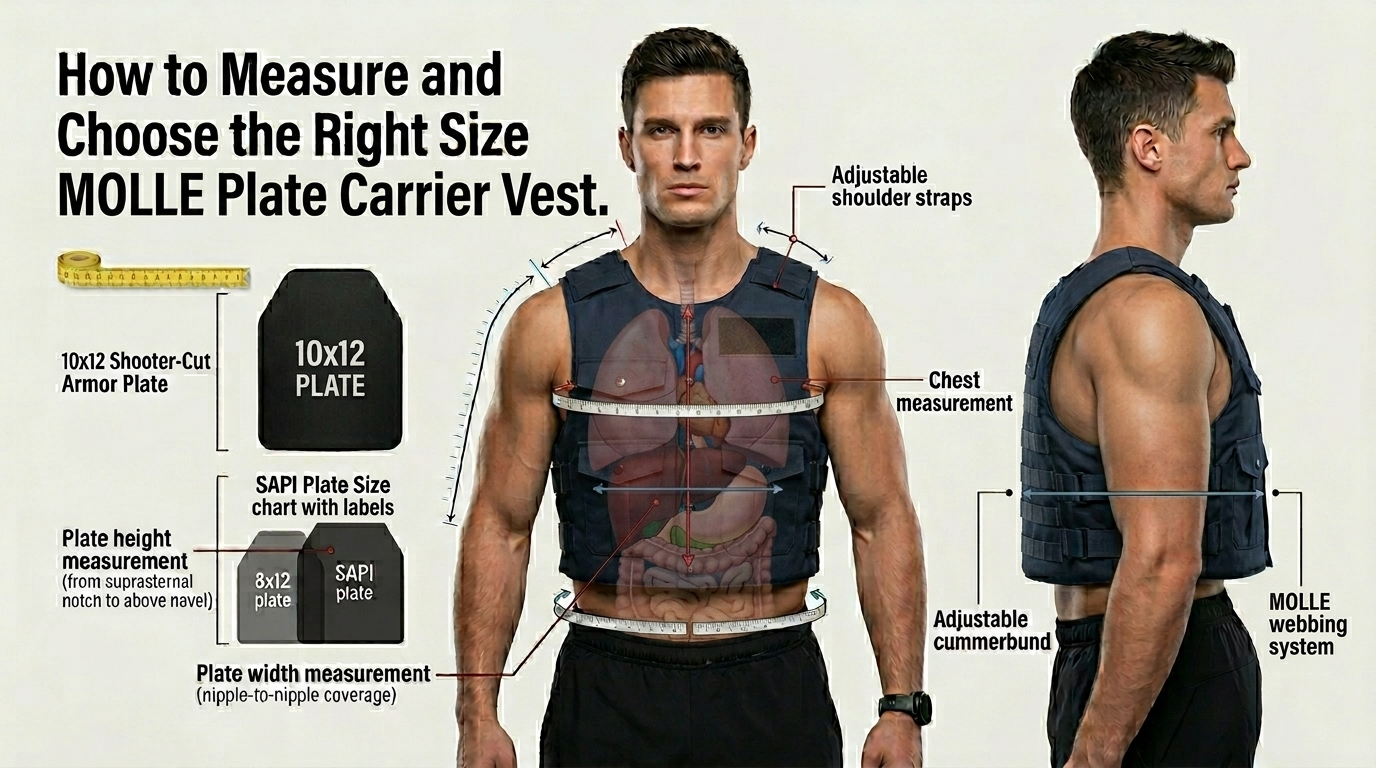
The first step in selecting a MOLLE plate carrier is measuring your chest circumference.
How to Measure
- Stand upright with your arms relaxed.
- Wrap a measuring tape around the fullest part of your chest.
- Keep the tape level and parallel to the ground.
- Ensure the tape is snug but not tight.
- Record the measurement in inches or centimeters.
Chest Size Guide
| Chest Measurement | Recommended Size |
|---|---|
| 34–38 inches (86–97 cm) | Small |
| 38–42 inches (97–107 cm) | Medium |
| 42–46 inches (107–117 cm) | Large |
| 46–50 inches (117–127 cm) | XL |
| 50+ inches (127+ cm) | XXL |
Keep in mind that sizing may vary slightly between manufacturers, so always check the specific size chart provided by the brand.
Step 2: Determine Your Armor Plate Size
Plate carriers are primarily designed to hold ballistic or training plates. Therefore, choosing the correct plate size is just as important as measuring your chest.
Measuring Plate Width
The width of the front plate should approximately match the distance between your nipples.
This helps ensure proper coverage without restricting arm movement.
Measuring Plate Height
The plate should cover the area from:
- The suprasternal notch (the small dip at the base of your throat)
- Down to approximately 2–3 inches above your navel
This area contains most of the body’s vital organs that require protection.
Common Armor Plate Sizes
SAPI Plate Sizes
| Size | Dimensions |
|---|---|
| Small | 8.75″ × 11.75″ |
| Medium | 9.5″ × 12.5″ |
| Large | 10.125″ × 13.25″ |
| XL | 11″ × 14″ |
Shooter Cut Plates
| Size | Dimensions |
|---|---|
| Standard | 10″ × 12″ |
Shooter cut plates are among the most popular options because they provide excellent protection while allowing greater shoulder mobility.
Step 3: Match the Carrier to the Plate Size
Most plate carriers are designed to accommodate specific plate sizes.
Examples
- Small Carrier → Small SAPI Plates
- Medium Carrier → Medium SAPI or 10″×12″ Plates
- Large Carrier → Large SAPI Plates
- XL Carrier → XL Plates
Many modern MOLLE plate carriers feature adjustable cummerbunds and shoulder straps, allowing them to fit multiple body types while maintaining proper plate placement.
Step 4: Check Shoulder and Waist Adjustments
A quality MOLLE plate carrier should offer:
Adjustable Shoulder Straps
These allow you to position the plates at the correct height on your torso.
Adjustable Cummerbund
The cummerbund secures the vest around your waist and prevents excessive movement.
Quick-Release Systems
Many tactical carriers include quick-release buckles for easy removal during emergencies.
Proper Plate Carrier Positioning
Correct placement is critical.
Front Plate Position
The top edge of the front plate should sit at the suprasternal notch.
This ensures protection for:
- Heart
- Major blood vessels
- Upper lungs
Rear Plate Position
The rear plate should align with the front plate and cover the upper back.
Common Mistake
Many users wear their carrier too low. A low-positioned plate may leave vital organs exposed and reduce overall protection.
Testing the Fit
Once your carrier is adjusted:
Perform Basic Movements
- Walk
- Run
- Squat
- Kneel
- Raise your arms
- Shoulder a rifle or training weapon
The carrier should remain stable without excessive shifting or bouncing.
Signs of a Good Fit
✔ Plates stay centered on the torso
✔ Carrier remains secure while moving
✔ Full arm mobility is maintained
✔ No excessive pressure points
Signs of a Poor Fit
✘ Carrier rides too low
✘ Excessive bouncing while running
✘ Restricted shoulder movement
✘ Plates shift inside the carrier
MOLLE Compatibility Considerations
When selecting a plate carrier, consider your gear requirements.
MOLLE webbing allows attachment of:
- Magazine pouches
- Medical kits
- Radio pouches
- Utility pouches
- Hydration systems
- Admin panels
- Tactical accessories
Ensure your chosen carrier provides enough MOLLE space without becoming excessively bulky.
Choosing a Plate Carrier Based on Body Type
Slim Build
- Medium or Small carriers often provide the best fit.
- Avoid oversized carriers that create unnecessary bulk.
Athletic Build
- Focus on plate sizing and adjustable cummerbund systems.
Larger Build
- Choose carriers with extended cummerbund adjustments and reinforced support systems.
Frequently Asked Questions
Should I Choose My T-Shirt Size?
No. Plate carriers should be selected based on armor plate size and chest measurements.
Can a Plate Carrier Be Too Large?
Yes. Oversized carriers may cause excessive movement, discomfort, and reduced mobility.
Is a 10″×12″ Plate Suitable for Most Adults?
Yes. The 10″×12″ shooter-cut plate is one of the most common sizes and fits many users effectively.
How Tight Should a Plate Carrier Be?
The carrier should fit snugly against the body without restricting breathing or movement.
Final Thoughts
Choosing the right MOLLE plate carrier vest starts with accurate measurements and proper plate selection. Measure your chest, determine the appropriate armor plate size, and ensure the carrier positions the plates correctly over your vital organs.
A properly fitted plate carrier will provide maximum protection, superior comfort, and unrestricted mobility, making it an essential part of any tactical, security, training, or outdoor loadout.